Beyond the Turing Test: New Science Article Proposes a Different Approach to Evaluating AI
6 August 2026
A new Policy Forum article published in Science calls for a fundamental rethink of how progress in artificial intelligence is understood and evaluated.
“The next Turing tests: Reimagining conceptions and measures of AI” is co-authored by Umang Bhatt, Assistant Professor in Trustworthy AI and a member of CHIA’s education team.
Although the Turing Test was largely abandoned as a formal AI benchmark years ago, the authors argue that its underlying focus on human-like intelligence continues to influence contemporary discussions about artificial general intelligence and superintelligence.
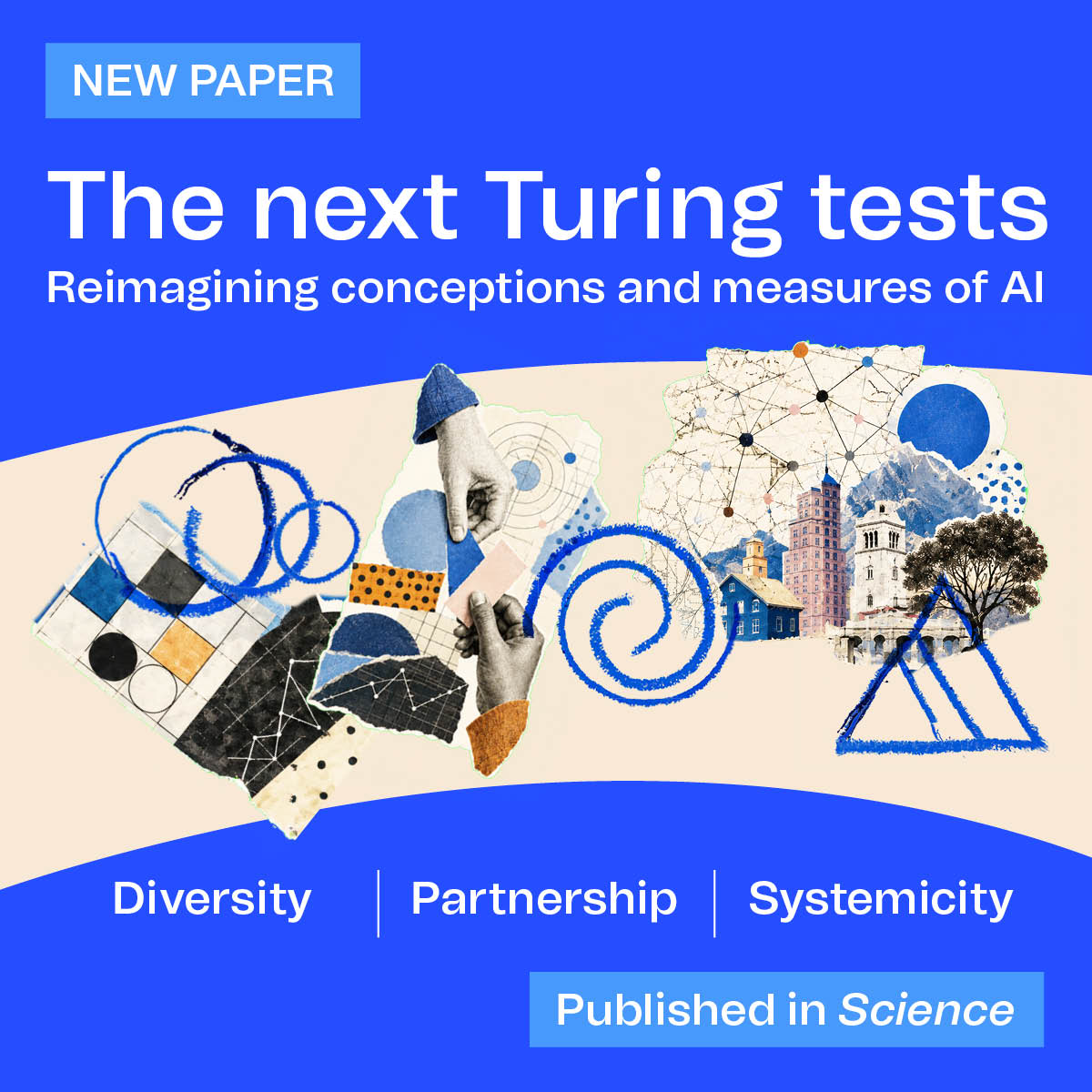
Instead of asking whether an AI system can imitate, match or replace a human, the article proposes that future approaches to AI evaluation should be built around three standpoints: diversity, partnership and systemicity.
Diversity considers whether an AI system has an appropriate profile of capabilities, behaviours, strengths and weaknesses for a particular role. Rather than treating AI progress as a single ladder leading towards human-level or “superhuman” intelligence, this approach would recognise that different systems may be suited to different tasks and contexts.
Partnership shifts the focus from whether AI can replace people to whether working with AI empowers them. The authors call for greater attention to the long-term effects of human–AI interaction, including whether AI supports human thinking and creativity or contributes to overreliance and the loss of skills.
Systemicity examines the wider effects of AI use and asks whether a particular intervention is beneficial to society overall. This includes looking beyond its immediate performance or benefits to one user and considering its broader and longer-term consequences for different people and communities.
The authors argue that these three perspectives could help researchers, policymakers and the public steer AI towards outcomes that are fitting, empowering and beneficial, while recognising and managing the associated costs and risks.
The article was written by Jose Hernandez-Orallo, Katherine M. Collins, Lucy Cheke, Laura Weidinger, Umang Bhatt, Thomas L. Griffiths and Stephen Cave.
Read “The next Turing tests: Reimagining conceptions and measures of AI” in Science (subscription access may be required).
Read the authors’ accepted manuscript