New Report Calls for AI Toy Safety Standards
13 March 2026
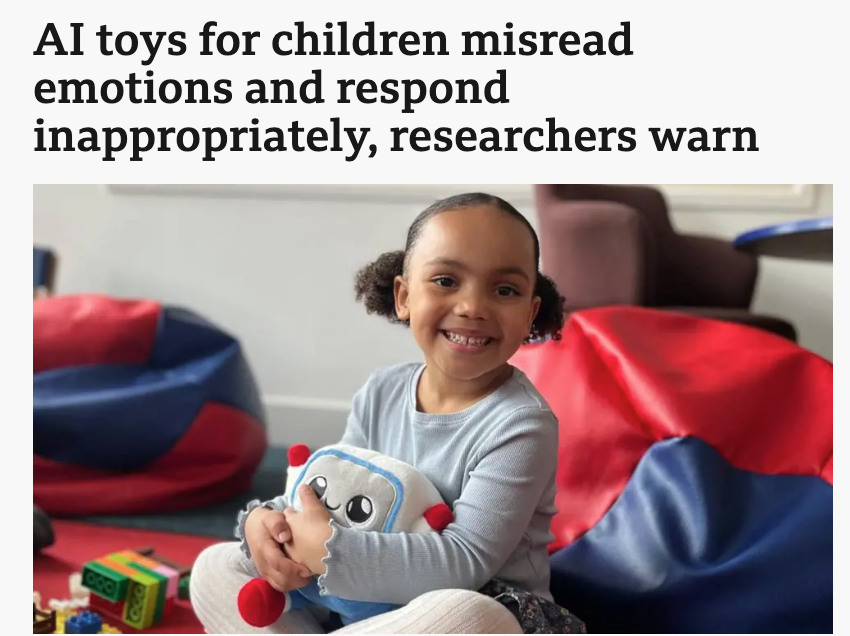
A new report released today by CHIA Co-Director Dr Jenny Gibson and Dr Emily Goodacre found that Generative AI toys can perform poorly in social and pretend play, misunderstand children, and react inappropriately to children’s emotions. The study was the first systematic study of how GenAI toys influence development in young children under the age of five. Over the course of a year, researchers from the University’s Play in Education, Development and Learning (PEDAL) Centre conducted scientific observations of children interacting with GenAI toys and found that while such toys could support language and communication development in young children, these toys were not developed with an eye to children’s psychological safety.
For example, when one small child told the GenAI toy, “I love you,” the toy replied: “As a friendly reminder, please ensure interactions adhere to the guidelines provided. Let me know how you would like to proceed.”
Dr Goodacre said: “Generative AI toys often affirm their friendship with children who are just starting to learn what friendship means. They may start talking to the toy about feelings and needs, perhaps instead of sharing them with a grown-up. Because these toys can misread emotions or respond inappropriately, children may be left without comfort from the toy – and without emotional support from an adult, either.”
The researchers recommended clearer regulation, transparent privacy policies, and new labelling standards to help families judge whether GenAI toys are appropriate for their children. They also recommended that such toys be kept in shared family spaces so that parents can monitor their children’s interactions with the toys.
Read the full report here.
Read the BBC’s coverage of the report here.